Alexander Technique for Killalea Strings
Bundanon July 2026
The Basics
We all develop our own habitual ways of sitting, standing, playing an instrument. Over time we grow into a posture that reflects these habits. Eventually, we may grow into a posture which begins to affect our performance, or cause discomfort or pain.
Alexander Technique is a way of learning to use your body efficiently, and over time this leads to better functioning throughout your body.
What You Are Learning
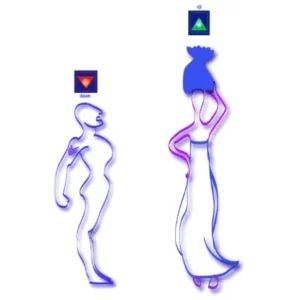
Awareness: To improve your use, become aware of the habits which distort your stature, and over time learn to do things with a more open stature. (It’s not what you do, it’s how you are in yourself when you do it.)
Shape (Direction): More specifically for good use: think of lengthening and widening the torso (i.e. don’t slump or over-arch); also think of not shortening the neck (i.e. don’t pull the head down toward the torso). Think of free, lengthened arms and easy, light fingers.
Pausing (Inhibition): It is helpful to stop momentarily and think of how you want to use yourself. Otherwise, we tend to remain on ‘automatic pilot’, our old habits kicking in before we’ve given our use any consideration.
Release vs Effort (The Right Thing Does Itself): Don’t try to ‘hold’ yourself with effort in the right place, but rather learn to release into a more open shape. Upright, open posture is what happens when we allow it to – we develop habits which shorten us and take us away from this open shape. We are learning to not do the things which distort our shape; we are learning to allow the open shape to return and remain when wanted.
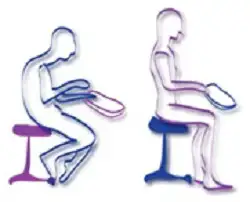
Feelings (Unreliable Sense): Old habitual use feels familiar and ‘normal’, so new use will feel different. If you rely on your feelings to guide you when sitting, standing, walking, etc, then they will simply lead you to your old habitual ways of doing these things.
General Thoughts for All Musicians
Freedom over rigidity
We get freedom and control from releasing into an open and mobile shape, not tightening into a shortened and more rigid one.
Away from the instrument first
Learn to sit/stand well without your instrument. Then learn how to add your instrument to the good sitting/standing without distorting it.
Pausing before acting (inhibition)
Practise pausing (inhibition) before starting to play – this gives you an opportunity to choose how you will be while playing, rather than habitually going into ‘playing mode’.
Stay in an open shape (direction)
Practise maintaining an open shape (direction) while holding your instrument and not playing; and then carry on maintaining the open shape while playing.
Slow practice
Practise slowly enough to maintain your good use, so you can stay relaxed and play correct notes easily. You want both accuracy and ease to become a foundation to your playing. These are always a work in progress!
Specific Thoughts for String Players
Violin and Viola
- Allow your head to balance lightly on your neck and let its weight rest naturally on the instrument.
- Allow your shoulders to widen to release any tension or compression in your upper back
- Keep both arms free and think of them moving from your back, not being stiff and fixed.
Cello
- Balance lightly and freely on your chair and allow yourself to stay lengthened; avoid collapsing onto your instrument
- Don’t lock your lower back or pelvis to achieve a rigid stability, but stay free and lenghtened and mobile
- Keep both arms free and think of them moving from your back, not being stiff and fixed.
Double Bass
- Allow your weight to be supported through your legs into the floor rather than bracing through your lower back to create a fixed balance.
- Avoid “holding” the instrument with stiff arms or torso
- Keep both arms free and think of them moving from your back, not being stiff and fixed.